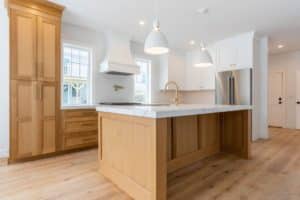
If you’re choosing tile for an entryway, mudroom, hallway, or kitchen that sees constant foot traffic, porcelain is usually the right material family to start from — but porcelain tile for high-traffic areas isn’t one product, it’s a spec. The tile’s hardness rating, its slip resistance, and its surface finish all change how it performs once kids, pets, and daily shoes start moving across it every day. This guide walks through what to check before you buy, so the floor you choose still looks and performs well years into daily use, not just on the showroom sample.
What Counts as a “High-Traffic Area” in a Home
Not every room takes the same amount of abuse. A guest bathroom or formal dining room sees light, occasional use. An entryway, mudroom, main hallway, or kitchen is a different category entirely — it’s crossed dozens of times a day, often in shoes, sometimes wet or sandy, and it’s where dropped pans, pet claws, and dragged furniture actually happen. Tile sold for those rooms needs to hold its finish under repeated abrasion, not just look good in a single photo. Knowing which category a room falls into is the first decision, because it determines every spec choice that follows.
Why Porcelain Tile Works for High-Traffic Areas
Porcelain is fired at a higher temperature and from a denser clay body than standard ceramic tile, which is why it’s the default recommendation for busy rooms. The denser body resists chipping at the edges, absorbs very little moisture, and doesn’t scratch or dull the way a softer floor covering can under grit and repeated foot traffic. That density is also why porcelain holds up near exterior doors, where sand, gravel, and winter salt get tracked in — a real consideration for a Maine entryway. The tradeoff is that not every porcelain tile is made or finished the same way, which is where the next two specs come in.
PEI Rating: Matching Tile Hardness to the Room
Tile manufacturers rate hardness and wear resistance on a five-point scale, shown on the product spec sheet as a PEI class from I through V. The lower end of that scale is meant for walls or very light residential foot traffic; the upper end is built for continuous traffic and grit. For an entryway, mudroom, kitchen, or main hallway, look for a rating built for heavy residential use rather than the lowest-rated option in a collection — a floor rated for light traffic can show wear noticeably sooner in a room that gets crossed every day. If a tile’s spec sheet doesn’t list a PEI class at all, ask before you buy; it’s a standard spec, and its absence is worth a question.
Slip Resistance and Finish: Matte, Textured, or Polished
Finish affects two things at once: how the floor looks and how it behaves underfoot. Polished porcelain reads sleek and reflective, but a smooth, glossy surface is more slippery when wet — a real factor at an entry door in Maine winters, or in a kitchen where spills happen. Matte and textured finishes give up some of that reflective shine in exchange for better traction, which is why they’re the more common recommendation for entries, mudrooms, and kitchen floors specifically. A semi-polished or honed finish can split the difference for a hallway that isn’t exposed to wet shoes or spills. If a room is genuinely wet-prone — a mudroom that takes snow melt, a kitchen near a sink — prioritize traction over shine.
Looks and Styles That Still Hold Up to Daily Use
Durability doesn’t mean settling for a plain look. Large-format porcelain in a stone-look finish reads clean and current with fewer grout lines to maintain, while wood-look porcelain planks give you the warmth of a hardwood floor with better resistance to water and wear at an entry or kitchen — a common alternative for homeowners who love the look in our guide to popular hardwood floor colors but need something tougher at a back door or mudroom. Mid-tone and slightly variegated finishes also do practical work in a busy room: they hide dust, pet hair, and everyday scuffing better than a single flat, very light or very dark color does. If you’re weighing options specifically for a kitchen floor, our porcelain tile for kitchen floors guide goes deeper on style choices for that room.
Installation, Grout, and Long-Term Maintenance
Large-format tile needs a flat, well-prepared subfloor — without it, you risk lippage, where tile edges sit slightly higher than their neighbors and catch dirt, shoes, and foot traffic unevenly. That’s a job worth having installed professionally rather than as a first DIY tile project, especially in a high-traffic room where any installation flaw gets found fast. Grout choices matter too: a narrower joint and a mid-tone grout color show dirt and grime less than a wide, bright-white joint does in a room that’s mopped and walked on daily. Once it’s installed, porcelain is genuinely low-maintenance — regular sweeping, damp mopping, and prompt cleanup of spills is typically all it needs, with no sealing required the way natural stone often demands.
Frequently Asked Questions
Is porcelain tile good for a mudroom or entryway?
Yes — its low moisture absorption and resistance to chipping make it one of the more common choices for spaces that take snow, sand, and daily shoe traffic. A matte or textured finish is generally the better pick there over a polished one.
Does porcelain tile crack or chip more than other flooring in busy rooms?
A tile rated for the right PEI class and installed on a properly prepared subfloor is built to resist chipping and surface wear under normal foot traffic; most chipping problems trace back to a low-traffic-rated tile, a flawed installation, or a genuinely heavy impact rather than everyday use.
Can I use the same porcelain tile in a kitchen and an entryway for a consistent look?
Often yes, as long as the tile’s PEI rating and finish suit both rooms’ traffic and moisture levels — check the same spec sheet against both spaces rather than assuming one size fits every room.
Is polished porcelain ever the right choice for a high-traffic room?
It can work in a drier, lower-moisture hallway, but it’s a harder recommendation for an entry or kitchen where water, snow melt, or spills are likely, since a smooth polished surface loses traction when wet.
Bringing It Together: Flooring as Part of a Whole-Kitchen Plan
Tile is rarely chosen in isolation — the floor you pick for a high-traffic entry, mudroom, or kitchen has to work with the cabinetry, countertops, and finishes around it, which is why flooring is one of the offerings Maine Cabinet Company designs alongside custom cabinetry at its Falmouth showroom. If you’re planning a kitchen or entry renovation and want to see tile, wood-look, and stone flooring options in person before you commit, our flooring services page is a place to start, or you can book a design consultation to walk through the full plan with us. Maine Cabinet Company is at 417 US Route 1 in Falmouth, serving Falmouth, Yarmouth, Cumberland, Freeport, Portland, Brunswick, and Windham — call (207) 956-7727 or schedule online to get started.