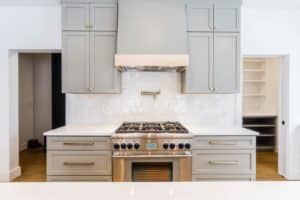
If you searched “change kitchen unit doors,” you’re likely using the British term for what American cabinetmakers call cabinet doors — the same job, different name. Either way, the good news is the same: swapping the doors on your existing cabinet boxes is one of the fastest ways to change how a kitchen looks without tearing it apart. This guide walks through what the job actually involves, when it’s a reasonable weekend project and when it isn’t, and how the door style you pick affects the outcome.
What “Changing Kitchen Unit Doors” Actually Means
Changing kitchen unit doors means replacing only the door panels — and usually the drawer fronts — while keeping the existing cabinet boxes (the frames bolted to your wall and floor) in place. It’s different from a full cabinet replacement, where the boxes come out too, and different from refacing, where a thin veneer is applied over the box fronts in addition to new doors. If you’re not sure which parts of a cabinet you’re actually working with, our guide to cabinet parts breaks down the box, the face frame, the door, and the hardware in plain terms before you start planning.
When Door-Only Replacement Works — and When It Doesn’t
This approach works well when the cabinet boxes themselves are square, sound, and free of water damage or swelling, and when you’re changing the look rather than the layout. It’s a poor fit when the boxes are warped, when you want to change your kitchen’s footprint, or when the existing doors are a construction style — overlay, inset, or frameless — that the rest of your kitchen wasn’t built around. Overlay doors sit on top of the face frame, inset doors sit flush inside it, and mixing the two on one run of cabinets rarely looks intentional. Confirm which construction type you have before you order anything.
Step-by-Step: Changing the Doors Yourself
For homeowners set on a DIY approach, here’s the general sequence:
- Measure every opening individually. Cabinet boxes built even a few years apart, or by different installers, are rarely perfectly uniform. Measure height and width of each door opening, not just one and assume the rest match.
- Confirm your hinge type and boring pattern. Older cabinets often use a different hinge cup diameter and drilling pattern than what current doors are pre-bored for. New doors from a different supplier than your originals may need re-drilling, which is a job worth having a cabinet shop do rather than freehanding it.
- Order doors and drawer fronts to match. Decide on style and finish (see the next section) and order enough extra material to cover a miscut or two.
- Remove the old doors and hardware. Label each door and opening as you go — the same numbering-and-photo approach used before painting cabinets works here too.
- Install new hinges and hang the doors. Hang one door at a time and check reveal gaps against its neighbors before moving to the next.
- Adjust and align. Most modern cabinet hinges have three adjustment screws — expect to spend real time here getting consistent gaps across a full run of cabinets.
The step people underestimate most is the hinge and boring compatibility check in step 2 — mismatched boring is the single most common reason a DIY door swap stalls out or ends with doors that never sit quite right.
Choosing a Door Style When You Swap Them Out
Changing the doors is also the moment to reconsider style, since you’re already ordering new ones. Shaker, slab, and raised-panel are the three styles most homeowners choose between, and each reads differently depending on your kitchen’s trim, hardware, and countertops. If you’re drawn to a more traditional, dimensional look, our raised panel cabinet door styles guide covers where that profile works best. For a broader comparison across the full range of door styles, see our kitchen cabinet styles guide.
What It Costs
Pricing for a door-only swap depends heavily on door count, material, and finish, and it varies a lot by supplier. We keep the full cost breakdown — DIY materials versus professional replacement, by door count — on its own page rather than duplicating it here: see our guide to the cost of replacing kitchen cabinet doors.
When to Call a Professional Instead
Bring in a cabinet professional when your boxes turn out to be inset or frameless construction, when more than a couple of openings are out of square, when you’re also considering a layout change, or when you’d rather have someone confirm hinge compatibility before you buy doors than find out after. A professional can also tell you honestly whether a door swap will actually get you the result you want, or whether refacing or a full custom replacement is the better move for your kitchen. Maine Cabinet Company offers a design consultation at our Falmouth showroom at 417 US Route 1 for homeowners weighing these options — you can book one here or call (207) 956-7727.
Frequently Asked Questions
Can I put new doors on old cabinet boxes?
Yes, as long as the boxes are square and structurally sound and you order doors sized to each individual opening rather than a single standard size.
Do I need to replace the hinges too?
Usually. New doors are typically bored for a specific hinge cup size, and reusing hinges that don’t match the new boring pattern is a common source of doors that don’t close flush.
Is changing just the doors cheaper than replacing the whole cabinet?
In most cases, yes — you’re paying for door material and hardware rather than full boxes, though the gap narrows as door count and finish quality go up. See our cost guide for a fuller breakdown.
What’s the difference between changing doors and refacing cabinets?
A door swap replaces only the doors and drawer fronts. Refacing adds that plus a matching veneer over the visible box fronts, so the whole cabinet — not just the doors — gets a new surface.
Getting It Right the First Time
A kitchen unit door swap is a genuinely accessible project when the boxes are in good shape and you’re careful about measuring and hinge compatibility. When either of those is in question, or you’re weighing a door swap against refacing or full replacement, Maine Cabinet Company is at 417 US Route 1 in Falmouth, serving Falmouth, Yarmouth, Cumberland, Freeport, Portland, Brunswick, and Windham. Schedule a free design consultation or call (207) 956-7727 for a straight answer on the right approach for your kitchen.